How to Winterize a Mobile Home (Before the Cold Catches You)
By Uncle Zally · May 2026 · 5 min read
A buddy of mine bought a mobile home in October, thought he had plenty of time to “get ready for winter.” By mid-December he was dealing with frozen pipes, a heating bill that made his eyes water, and drafts coming through the floor that felt like someone left the front door open. Dont be that guy.
Winterizing your mobile home isnt complicated, but it does take some planning. And the earlier you start, the cheaper and easier it gets. Most of the stuff on this list you can knock out in a weekend with basic tools and maybe $100 to $500 depending on how much your place needs.
Your Pipes Are the Biggest Risk
This is the one that bites people the hardest. Mobile home water lines run underneath the house, exposed to whatever the weather throws at them. When it drops below 20 degrees for about six hours, those pipes can freeze solid. And frozen pipes dont just stop your water — they can burst, which means water damage, mold, and a repair bill you really dont want.
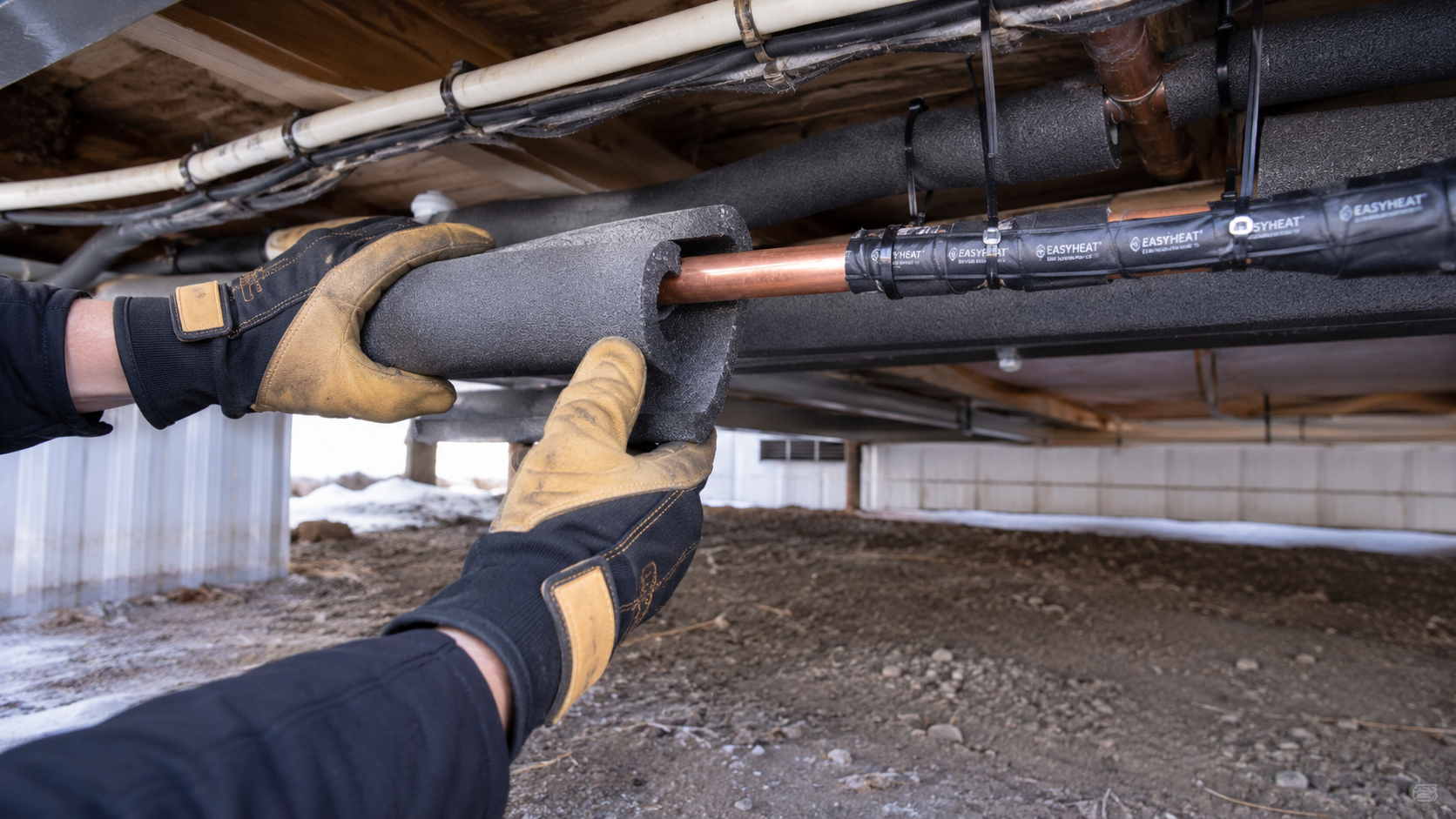
Heat tape is your best friend here. Its basically an electric cable that wraps around your pipes and kicks on automatically when temps hit around 40 degrees. You can pick up a roll for $15 to $50 depending on length. Wrap it around every exposed pipe under the house, especially the ones closest to the outside edges.
On top of the heat tape, add foam pipe insulation. The stuff costs almost nothing — maybe a dollar or two per six foot section at any hardware store. Slide it over the pipes, tape the seams shut, and youve just cut your freeze risk in half.
One more trick that old timers swear by: on the coldest nights, let your faucet drip. Just the tiniest stream on the hot water side. That keeps water moving through both the hot and cold lines, and moving water is a lot harder to freeze than standing water.
Check Your Skirting (Seriously)
Skirting is the stuff that goes around the bottom of your mobile home, closing off the gap between the floor and the ground. A lot of people ignore it, but good skirting is basically a wall of protection for your pipes, your floor insulation, and your heating bill.
Walk around your place and look for cracks, holes, or panels that have come loose. Animals love to rip into damaged skirting for a warm place to sleep, which just makes the problem worse. Vinyl skirting is the most common and runs about $300 to $1,500 depending on the size of your home. Insulated skirting costs more — up to $3,000 — but if you live somewhere that gets real winters, its worth every penny.
Even if your skirting looks ok, check the vents. You want them open enough to prevent moisture buildup underneath (which causes mold and rot), but not so wide open that arctic air is blasting your pipes all night.
Seal the Gaps Around Windows and Doors
Mobile homes lose a ton of heat through windows and doors. More than stick built houses, honestly. The frames shift over time, weather stripping wears out, and caulking cracks and peels.
Grab a tube of caulk and go around every window and door frame, inside and out. Fill any gaps you can see or feel air coming through. Replace any weather stripping thats worn flat or missing entirely. A pack of adhesive weather stripping runs about $5 to $10 and takes maybe 20 minutes to install per door.
If your windows are single pane (most older mobile homes have them), pick up some window insulation film kits. Theyre basically clear plastic you shrink tight with a hair dryer, and they create a pocket of dead air that acts like a second pane of glass. Costs about $3 to $5 per window and makes a noticeable difference. You can feel it immediately.
Get Your Furnace Checked Before You Need It
Dont wait until the first cold snap to find out your furnace has a problem. Schedule an inspection in early fall — most HVAC companies charge between $80 and $100 for a basic checkup. They’ll clean the burners, check the heat exchanger, and make sure everything is running safe.
Change your furnace filter too. A dirty filter makes your system work harder, which means higher bills and a shorter lifespan for the unit. Filters cost anywhere from $5 to $20 and should be swapped every one to three months during heating season.
While you’re thinking about heat, make sure you’ve got working carbon monoxide detectors. This isnt optional. Mobile homes are tighter spaces than regular houses, and a cracked heat exchanger or blocked vent can put CO into your living space fast. Put one near your furnace and one near your bedroom. Batteries should be fresh.
Dont Forget the Roof and Underbelly
Your roof takes a beating year round, but winter is when small problems turn into big ones. Check for any soft spots, cracked seals around vents and skylights, or areas where water might pool. A $10 tube of roof sealant now can save you thousands in water damage later.
Underneath, check your belly board (the material covering the bottom of the home). If its torn or sagging, cold air gets up into the floor cavity and your feet will let you know about it. Belly board repair tape or replacement sections arent expensive, and they make a real difference in how warm your floors feel.
Uncle Zally’s Book Covers This Stuff Too
If you’re still in the shopping phase and havent bought your mobile home yet, knowing what to look for with winterization can actually save you money on the purchase. A home thats already been well maintained for winters is worth more than one thats been neglected. Uncle Zally covers maintenance red flags, what to inspect before buying, and a lot more in his book — its $19.95 and comes with three bonus guides. Check it out here.
Ready to Buy Smart?
Uncle Zally’s book walks you through every step of financing, negotiating, and closing the deal on a mobile home. Plus you get two bonus books free.