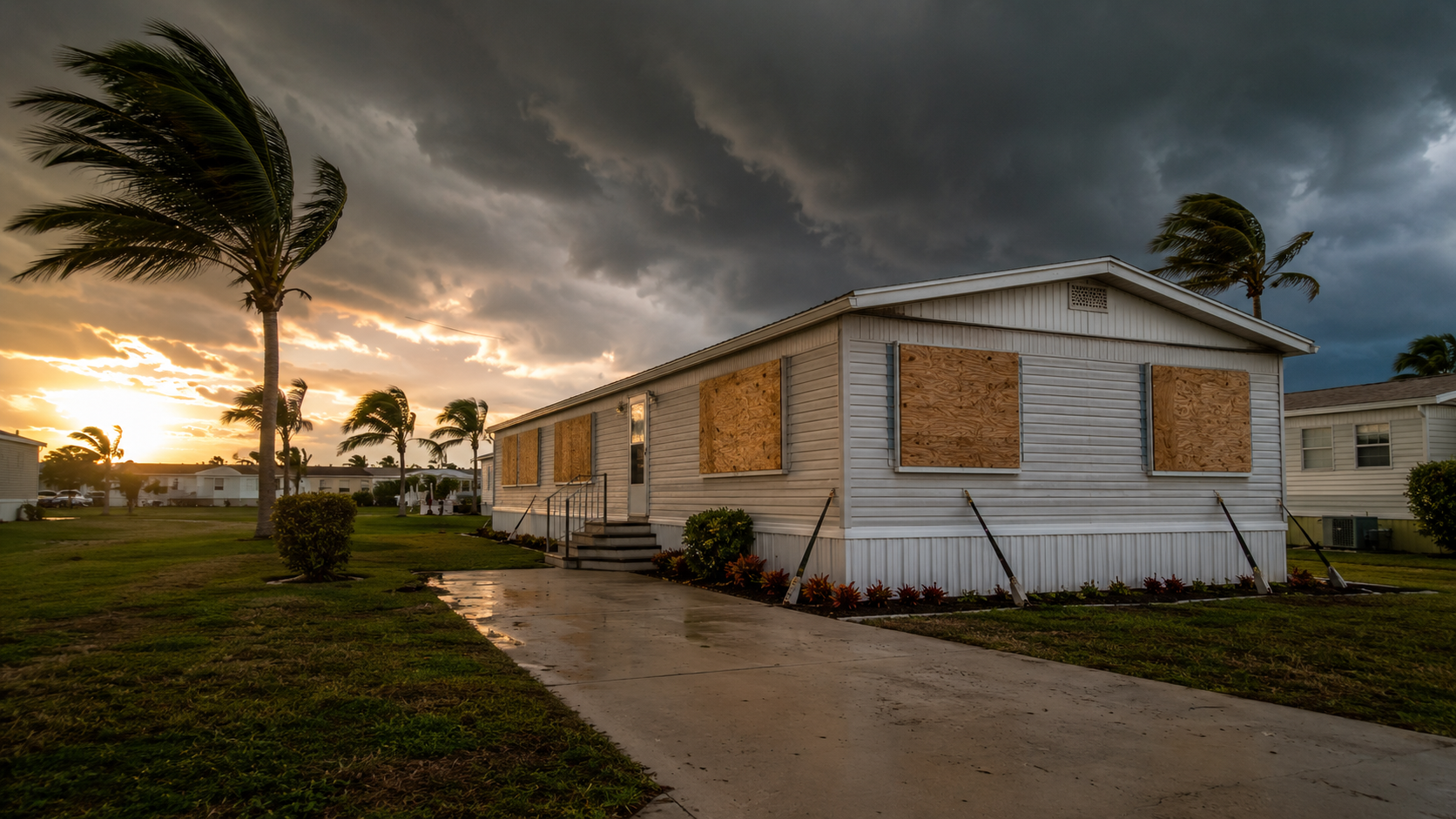
Here’s a fun fact FEMA buried in their guidance: you’re not supposed to ride out a hurricane in a mobile home. Ever. Not even a Cat 1. The official word from both FEMA and NOAA is to evacuate to a sturdier shelter before the storm shows up.
That’s a heavy way to open a blog post, I know. But it sets the right tone. Mobile home hurricane prep isn’t about turning your place into a bunker. It’s about protecting the structure as best you can, then getting yourself somewhere safe before the wind hits.
Hurricane season runs June 1 to November 30. If you live in Florida, the Gulf, or anywhere along the Atlantic coast, this stuff matters every year. Here’s whats worth doing, and a few things that get talked about a lot but dont actually move the needle.
Know Your Wind Zone (And What It Actually Means)
Every manufactured home built after 1976 has to follow the HUD code, and that code splits the country into three wind zones:
- Zone I: rated for 70 mph winds. Most inland US.
- Zone II: rated for 100 mph winds. Coastal areas in the Gulf and Atlantic.
- Zone III: rated for 110 mph winds. The highest risk hurricane areas.
If you’re in Florida, you’re in Zone II or Zone III. Counties like Miami-Dade, Broward, Palm Beach, Lee, Collier, Pinellas, Sarasota, and Monroe sit in Zone III. The rest of the state is Zone II.
Here’s where it gets interesting. A Zone III home can be installed in Zone I or II, but the reverse isnt true. So if you bought a mobile home built for Wind Zone I and you’re sitting in coastal Florida, you’ve got a problem. The home wasn’t engineered for what it’s facing. The 1994 HUD code revision after Hurricane Andrew tightened these standards a lot, so anything built before that is going to be weaker on paper.
Check your data plate. It’s usually inside a kitchen cabinet or near the electrical panel. It tells you the wind zone the home was built for. If you don’t know this number, find out before hurricane season starts.
Tie Downs and Anchors Are The Big One
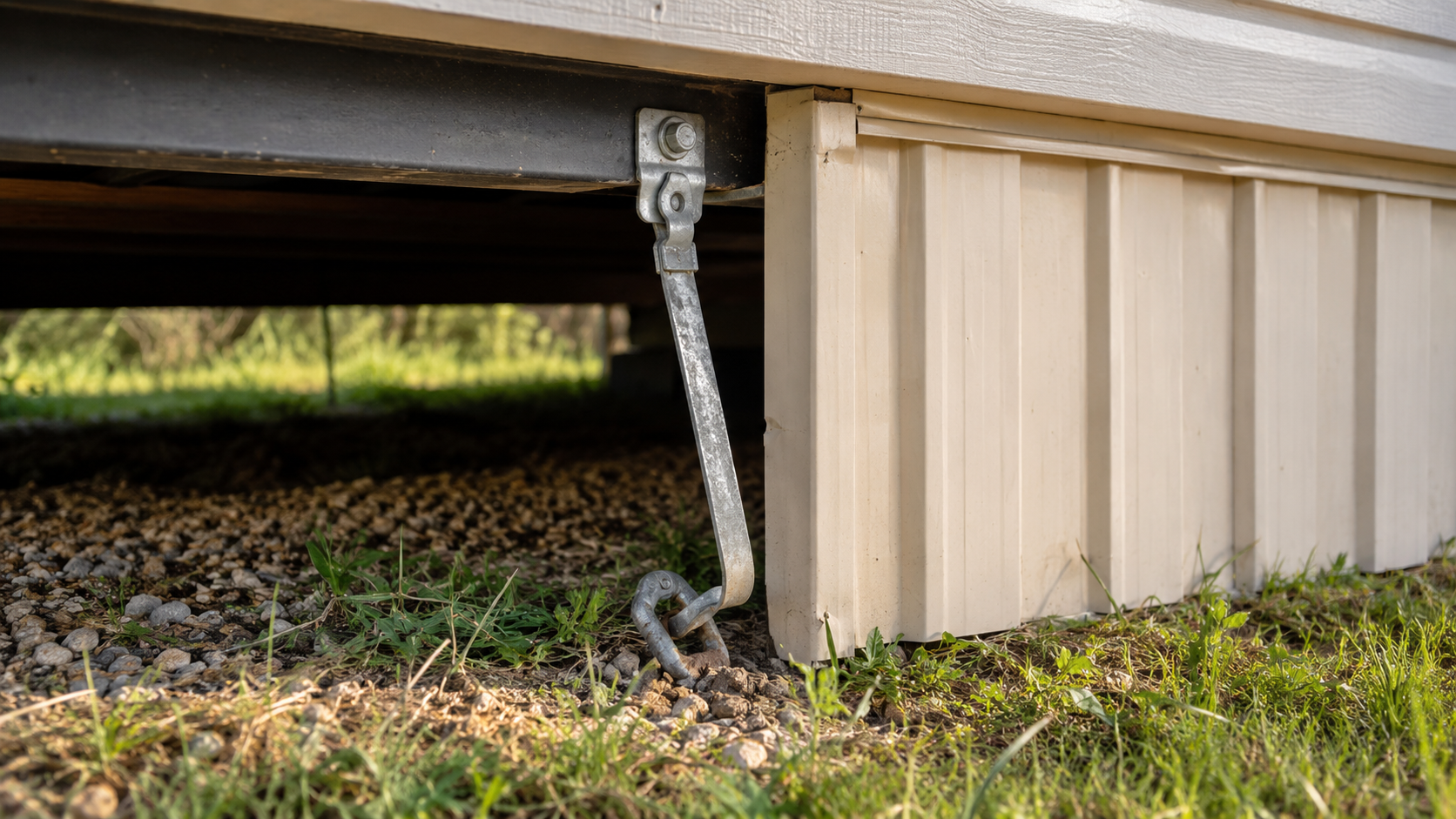
If there’s one thing worth obsessing over, it’s the tie-down system. This is what keeps your home from sliding, lifting, or rolling in high winds. A loose or corroded anchor isn’t going to do its job when the wind hits 90 mph.
Modern systems use steel augers driven 3 to 4 feet into the soil. Steel straps connect the anchors to the home’s frame. The straps need to be properly tensioned, not loose, not bowed.
Things to check right now:
- Are the straps tight, or sagging?
- Is there rust on the metal? Surface rust is fine. Heavy rust is not.
- Are any anchors loose in the ground? Try wiggling them gently.
- Are all the required anchors actually there? Wind Zone II homes typically need more anchors than the bare minimum.
If anything looks off, get a licensed installer out before the season really kicks off. In Florida, the Hurricane Loss Mitigation Program sometimes helps fund upgrades for older homes, which is worth a call to your county emergency management office. Don’t try to DIY new anchors. Soil torque ratings matter, and a bad install is worse than no install.
The Other Stuff That Actually Helps
After tie-downs, here’s what’s worth your time before a storm:
Skirting. Check it now. Loose or damaged skirting lets wind get under your home and lift it. Sounds dramatic, but that’s how mobile homes get flipped. Secure any panels that are flapping or missing screws.
Windows and doors. Plywood is cheap and works fine if you cut and pre-drill it ahead of time. Half inch thick, screwed into the frame, mark which piece goes where. Roll down or accordion shutters are the upgrade if you can afford them. Sliding glass doors are the biggest weak point in most mobile homes. Reinforce them or board them up.
Propane tanks. Shut off the gas at the tank before you evacuate. Secure the tank itself if possible. Loose propane tanks are basically explosive missiles in 100 mph wind.
The yard. Anything not bolted down has to come inside or into the shed. Grill, patio furniture, lawn ornaments, kids toys, trash cans, potted plants. All of it. A plastic chair traveling at 70 mph will go through a window like its not even there.
Trees. If you’ve got branches hanging over the roof, get them trimmed back well before a storm is in the forecast. Tree services book up fast once a hurricane is named.
Documents and meds. Pack copies of insurance papers, ID, the title to your home, and at least a weeks worth of any medication. Keep them in a waterproof bag with your go bag.
Have An Evacuation Plan Before You Need One
This is the part people skip and then regret. Know where you’re going. A friend’s house an hour inland counts. A motel three counties over counts. A county emergency shelter counts. What does NOT count is staying in your mobile home and hoping for the best.
A few things to map out now:
- Two routes out of your area (in case one gets jammed or flooded)
- A destination outside the evacuation zone
- A check-in person who isn’t local, who you call when you’re safe
- Pet plan if you have animals (not all shelters take them)
If you’re on a fixed income or have mobility issues, register now with your county’s special needs evacuation program. They’ll often pick people up. Most counties have these set up before June 1 every year. The Florida Division of Emergency Management has a solid breakdown of manufactured home prep if you want a deeper read.
One Last Thing: Your Insurance Probably Isnt What You Think
Standard mobile home insurance covers wind damage in most cases, but it almost never covers flood. That’s a separate policy through the NFIP or a private flood insurer. If you’re in a flood zone and you don’t have flood coverage, a hurricane can wipe you out financially even if the home survives the wind.
Pull out your policy and read the declarations page. Look for the deductible (hurricane deductibles can run 2 to 5 percent of the dwelling coverage), check the wind/named storm sublimit if there is one, and confirm whether flood is included or excluded. We covered the basics of mobile home insurance in another post on the blog if you want the deeper rundown.
Want The Full Picture On Buying And Living In A Mobile Home?
Hurricane prep is one piece of a much bigger picture. Uncle Zally covers everything from finding the right home to financing, inspecting, negotiating, and yes, protecting your investment from stuff like storms. The book is $19.95 and comes with three bonus guides. Check it out here.
Stay safe out there. Storm season is no joke, but a few hours of prep work in May can save you everything you own.