It’s late July, the AC has been running since nine in the morning, and the electric bill just showed up looking like a car payment. If you live in a mobile home, you’re not imagining it. Mobile homes use about 35% more energy per square foot than site built houses, and the average owner hands the utility company around $1,500 a year.
Cooling costs nationwide have jumped about 40% since 2020, which is why a mobile home energy bill stings a little worse every summer. Most of what drives it up is fixable, though. Plenty of the fixes cost less than $100, and a few of the bigger ones pay for themselves within a couple of seasons.
Why your mobile home energy bill runs so high
Blame the construction era. Homes built before 1980 burn over 50% more energy per square foot than other housing types, and even units from the 80s and 90s shipped with insulation that wouldn’t come close to passing today’s standards. Thin wall cavities, single pane windows, and a metal roof that soaks up sun from ten till seven. The house itself is fighting your air conditioner.
Then there’s the ductwork. In most mobile homes the ducts run through the belly, under the floor. Old ducts leak, and when they do you’re paying to cool the crawl space instead of the living room. Some owners lose a good share of their cooled air before it ever reaches a vent.
Start with the cheap fixes
Nudge the thermostat up two or three degrees and let ceiling fans cover the difference. A fan costs pennies a day to run. Your compressor doesn’t.
Swap the AC filter every month in summer, a clogged one makes the system run longer for the same amount of cooling. Filters are a few bucks each, so this might be the highest return move on the whole list.
Window coverings matter more than people think. Hang insulated or blackout curtains on the south and west windows and keep them shut through the afternoon, you’ll feel the difference by dinner. Caulk is the other bargain, a few $6 tubes around window frames and door trim will close the gaps that bleed cool air all day. And while you’re outside, walk the skirting and patch any holes or cracks. Openings down there let hot air circulate under your floor, thats exactly what you don’t want in July.
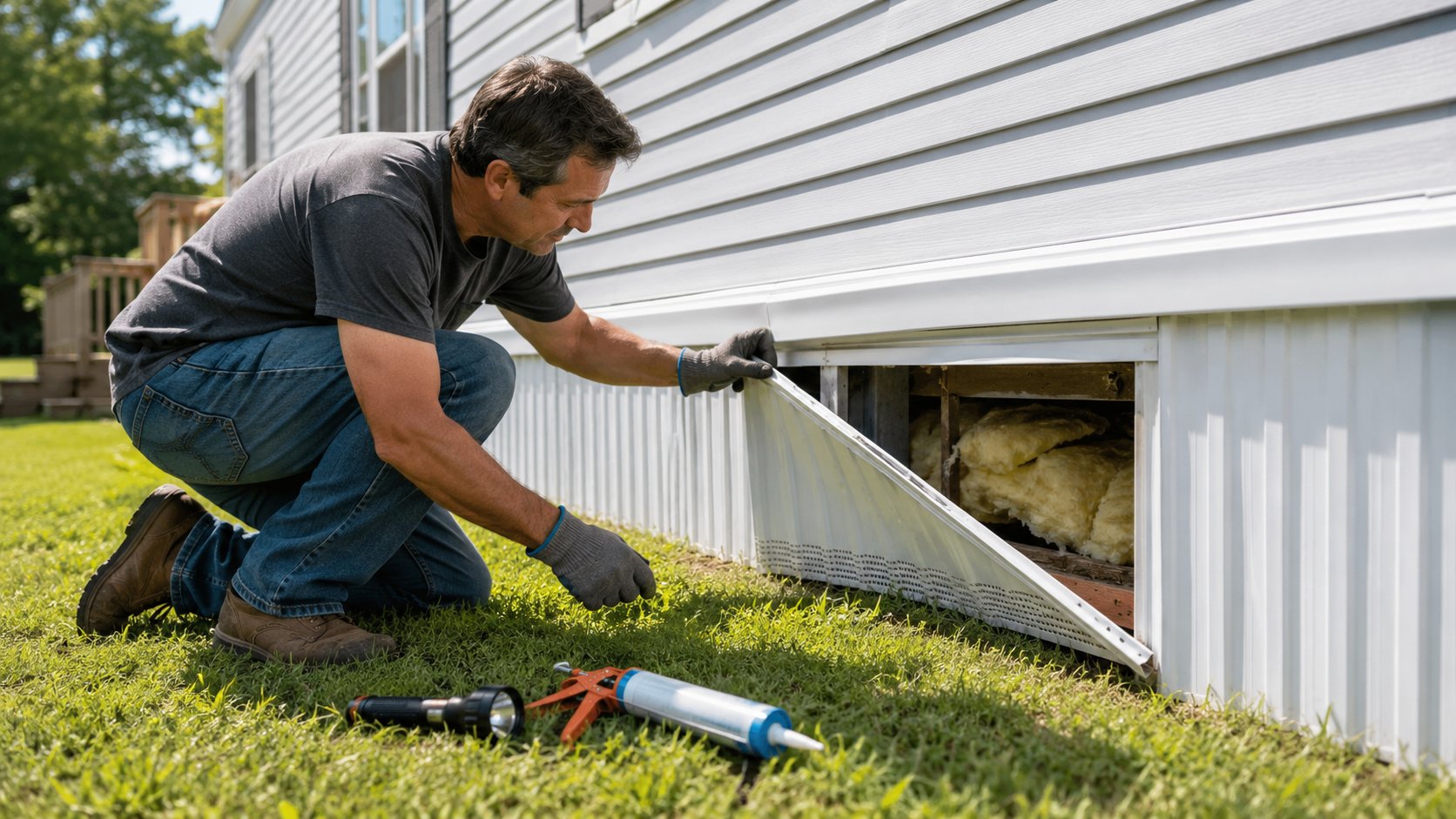
The underbelly is where cool air goes to die
Under the floor sits a fabric layer called the belly board. It holds the floor insulation in place. Animals tear it, moisture rots it, time does the rest, and once it rips the insulation sags, gets wet, and falls away until your floor and ducts sit bare. Decent floor insulation cuts heat transfer by around 11% and wall insulation by about 13%, so a shredded belly is real money sliding out from under you every month.
Fair warning, crawling around under a mobile home in July is miserable work, so go early in the morning. Bring a flashlight. Look for hanging fabric and damp insulation, and check that the duct runs haven’t pulled apart at the joints. Repair kits cost little compared to what the damage adds to the bill. Insulated skirting is worth a look too, it can trim heating costs by 5 to 15% and keeps the space under the home cooler through the hottest months. These same fixes carry you into winter, and our guide to winterizing a mobile home picks up where this one leaves off.
Bigger swings that pay for themselves
A cool roof coating reflects up to 85% of sunlight instead of letting a metal roof soak it in. On most mobile homes that’s a weekend job with a roller and a couple buckets of coating, and owners in Florida and Arizona swear by the results. Our rundown of repairs that drain your wallet shows what happens when roofs and bellies get ignored, a $60 bucket of coating now beats a $2,000 fix later.
If the home still runs its original electric furnace, a heat pump is the biggest lever you can pull. Owners who sealed their air leaks and swapped the old furnace for a heat pump have reported savings up to 50%, and modern units handle cooling too. Double pane windows cut heat loss by as much as 30% compared to single pane, though the price is steep enough that curtains stay the budget play for most people. A shade tree on the west side works on a longer timeline, mature shade can knock 10% or more off the electric bill.
Before spending big, check for free help. The Department of Energy’s Weatherization Assistance Program upgrades income qualified homes at no cost, and manufactured homes qualify. Lots of utilities and electric co-ops run free energy audits, and some still offer rebates on heat pumps and insulation. One heads up: the federal tax credit that used to cover insulation and HVAC upgrades ended December 31, 2025, so don’t build a budget around it. The DOE’s manufactured home efficiency guide is a good place to dig deeper.
Buying one? Read the energy story before you sign
Two identical looking single wides can cost very different amounts to live in. Ask the seller for a year of utility bills, and peek behind the skirting while you’re at it. A cheap home with a shredded belly and a 1978 furnace doesn’t stay cheap for long.
Uncle Zally walks through energy costs, inspections, and the rest of the real math in his book. Its $19.95 and comes with three bonus guides. Check it out here.