You find a mobile home that looks great. Clean inside, priced way below everything else you’ve seen, and the seller’s motivated. Then you call a lender and they ask one question: what year was it built? Just like that, the deal you were excited about can fall apart over a date stamped on a little metal tag.
This trips up more first time buyers than almost anything else. The build year affects whether you can get a loan, whether a park will even let you bring the home in, what your insurance runs, and what you get back when you sell. A home from 1974 and a nearly identical one from 1978 can be worlds apart on paper. That gap matters a lot when you’re buying an older mobile home.
Here’s what the build year actually controls, and how to check it yourself before you fall for a home you can’t finance.
The 1976 line that splits everything
One date matters more than any other: June 15, 1976. That’s when HUD’s construction and safety code kicked in for factory built homes. Anything made before that is technically a “mobile home.” Anything after is a “manufactured home” built to federal standards covering wiring, plumbing and structural strength.
Why care about a rule from 50 years ago? Because lenders draw a hard line there. Homes built before June 15, 1976 don’t qualify for FHA, VA, USDA, or conventional loans. None of them. If the home predates that date, your only real options are a chattel loan, a personal loan, cash, or a seller willing to carry the note.
The cutoff isn’t lenders being difficult for no reason. Pre 1976 homes went up before any national safety rules existed, so two homes from the same year could be wildly different in quality. The HUD code put a floor under all of it.
Clearing 1976 doesn’t mean you’re home free
Here’s the part that surprises people. A lot of lenders won’t touch anything older than about 20 years, and plenty draw the line at homes built before the mid 1990s or even 2000. So a perfectly legal 1985 manufactured home might still be a no from a bank, even though its HUD compliant.
For an FHA loan, the home has to check several boxes: built after June 15, 1976, carry the red HUD certification label, have at least 400 square feet of living space, sit on a permanent foundation, and be classified as real estate instead of personal property. Miss one and the loan is off the table.
Paying cash? Then this matters less. But most people aren’t, so the build year basically decides which lenders will even pick up the phone.
Parks and movers have their own age rules
Financing isn’t the only place the year bites you. Mobile home parks set their own rules, and a lot of them won’t accept a home older than 10 years. The idea is to keep the community looking newer, and honestly, to price out cheaper homes. So even if you buy a solid 2005 home outright, the park you want might turn it away at the gate.
Moving an older home is its own headache. Plenty of states won’t permit relocating a home over 20 years old without a full inspection, and some cities block it completely. A few states do protect owners. Arizona, for one, says a park can’t force you to remove a post 1976 home just because of its age. Rules swing wildly from state to state though, so check yours before you assume anything.
This is why grabbing a cheap older home to move onto a lot can turn into a money pit fast. The home might be perfectly fine. Getting permission to put it where you want is the hard part.
How to check the year on an older mobile home
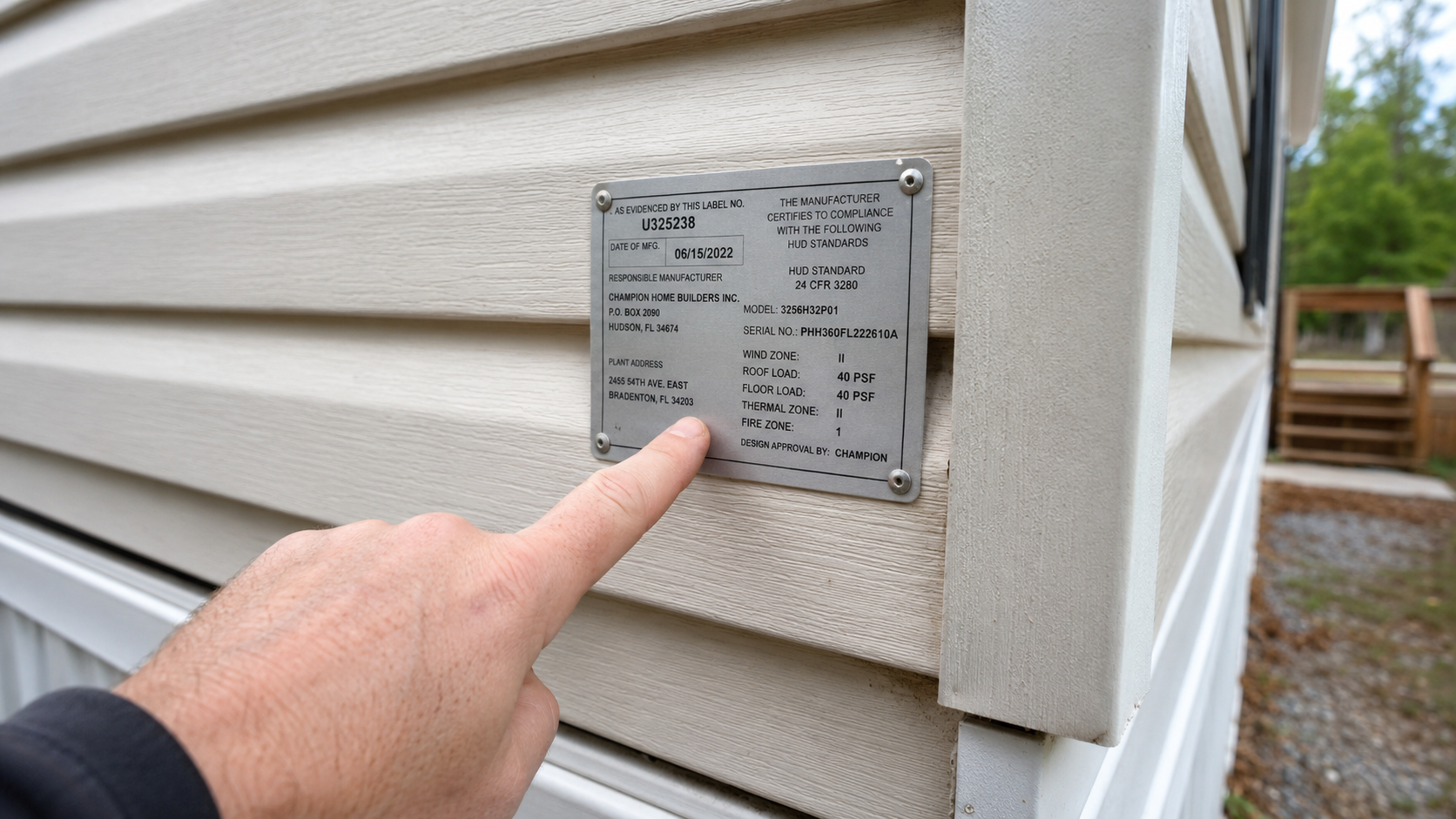
Don’t take the seller’s word for it. Find the proof yourself.
Look for the red HUD certification label, a small metal tag riveted to the outside rear of each section, usually about a foot up from the left rear corner. Each section of a double wide has its own. If the tag is painted over or gone, head inside and find the data plate. It’s a paper label listing the build date and specs, usually near the main electrical panel, inside a kitchen cabinet, or in a bedroom closet.
A missing tag is a real problem, not a small one. Appraisers and lenders usually require it, and HUD won’t issue a replacement. What you can do is request a Letter of Label Verification through HUD’s records via IBTS, which digs up the home’s history. Their label department is at (866) 482-8868 or labels@ibts.org. That takes time, so if you’re on a deadline, factor it in.
If the seller can’t tell you the year, there’s no tag, and no data plate, that’s a walk away for a lot of buyers. I’d be cautious too.
Know what you’re signing up for
The build year is one of those details that seems small until it costs you a loan or a spot in the park you had your heart set on. A few minutes checking a metal tag can save you weeks of frustration later.
Uncle Zally covers this and a lot more in his book. Its $19.95 and comes with three bonus guides that walk you through the whole buying process, from spotting a good deal to closing day. Check it out here.